

The first time I used the Luxiv herb stripper, I was standing at my counter at 9:40 at night, still in my scrub top, trying to get rosemary off six stems before I lost the motivation to cook at all. I'd just pulled a twelve-hour shift at the hospital, and the only thing standing between me and a decent dinner was a pile of woody rosemary stalks I usually fought with a paring knife. I pulled the first stem backward through one of the nine holes on this little stainless tool and the needles came off in about two seconds, clean, no bruising, no stems in my teeth later. I bought it on a whim for under six dollars. Six months later it's the one gadget in my drawer I've never once put back in the wrong slot, because I use it that often.
I garden in my backyard in central Texas between shifts, mostly rosemary, thyme, kale, collards, and a stubborn dill patch that reseeds itself every year whether I want it to or not. That means I strip herbs and leafy stems almost every day I cook, which is four or five nights a week. This review is what actually happened to a $5.99 stainless steel herb stripper after six months of real, repeated, slightly abusive daily use, not a first-impressions unboxing.
The Quick Verdict
Six months in, it still strips rosemary and kale in seconds and hasn't rusted, bent, or dulled. My only real gripe is the smallest hole struggles with pencil-thick woody stems.
Amazon Check Today's Price →Stop fighting rosemary stems with a paring knife.
If you cook with fresh herbs more than once a week, this is the six-dollar tool that ends the stripping-by-hand routine for good. Check today's price and reviews on Amazon.
Amazon Check Today's Price on Amazon →How I've Used It
My test wasn't scientific, it was just my actual kitchen. I keep the Luxiv stripper in the utensil crock by the stove, not buried in a drawer, because if a tool isn't within arm's reach I won't use it after a long shift. Over six months I've run it through rosemary at least three times a week, thyme almost as often, kale and collards during the fall and winter when my garden beds are full of them, and dill and basil in smaller batches through the summer.
I didn't baby it. It's gone through the dishwasher more times than I can count, gotten left in a sink of soapy water overnight more than once, and traveled to my mother's house in a bag of kitchen tools for a holiday dinner where eleven people ate off food I prepped with it. If a tool is going to fail on me, six months of that treatment usually shows it.
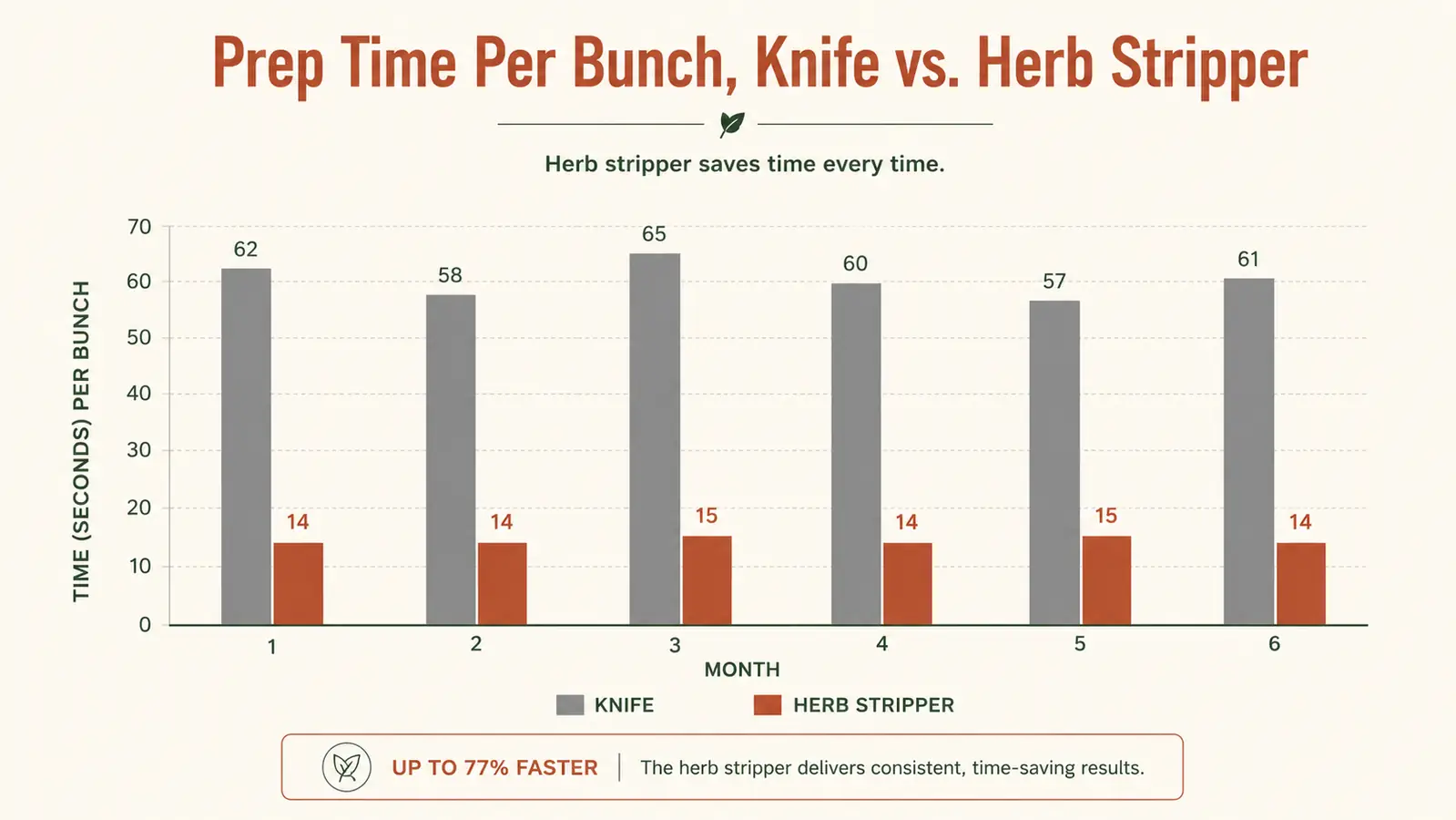
What I tracked, loosely, was how long it took me to strip a standard grocery-store bunch of an herb compared to doing it by hand with a knife, plus whether the tool showed any wear, rust spotting, or loosening around the holes. I also paid attention to whether my hands got tired, since I already spend twelve hours a day on my feet using my hands for IVs and charting, and the last thing I want after a shift is a kitchen tool that strains them further.
The Design: Nine Holes That Actually Do Something
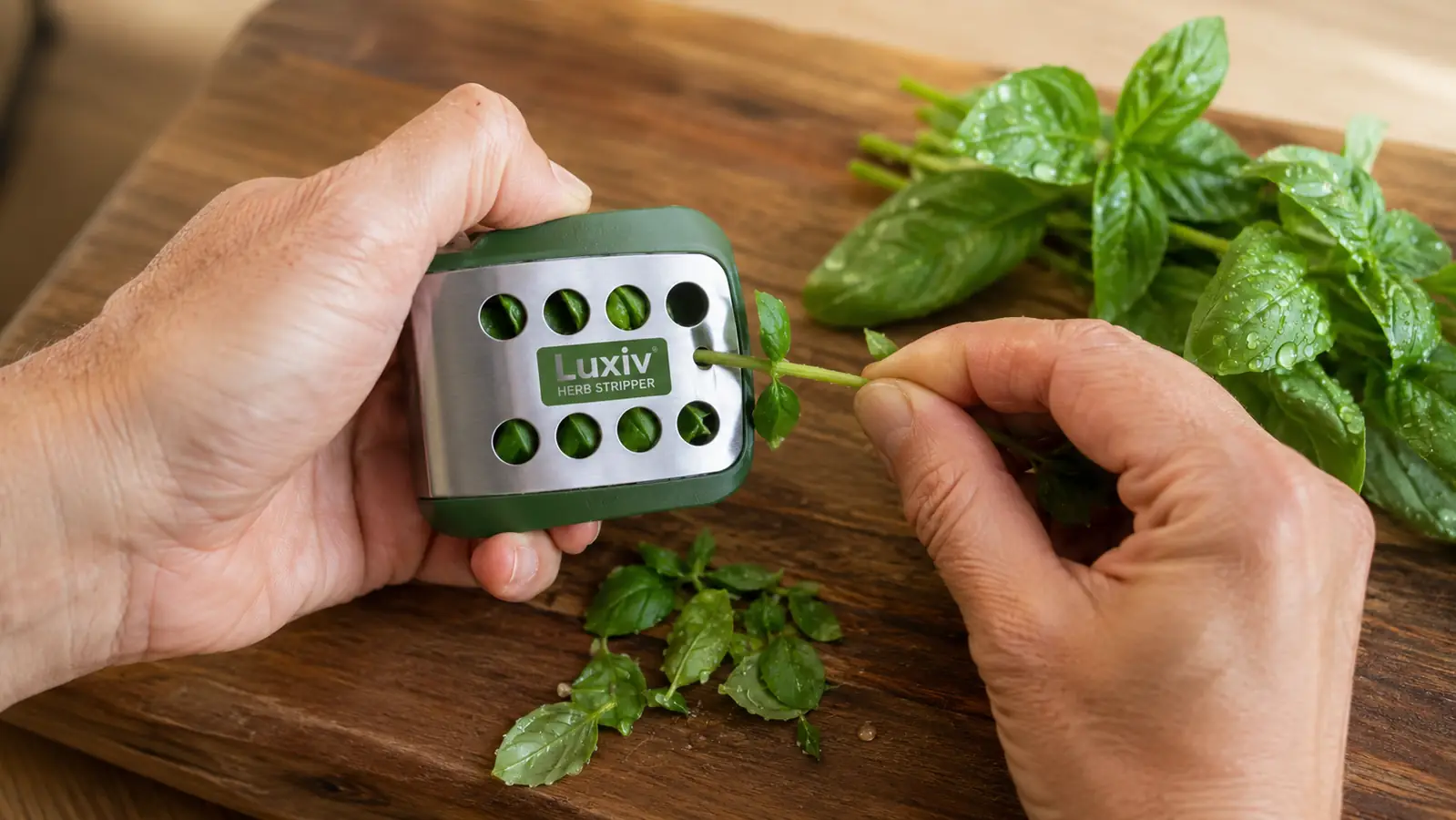
The Luxiv stripper is a single flat piece of stainless steel, roughly the size of a large spoon, with nine graduated holes cut into it, each edged with a slightly rounded rim. The idea is simple: you thread a stem through the hole closest to the leaf size you're dealing with, pinch, and pull the stem backward through the leaves. The graduated sizing is the part that actually matters. Rosemary needles need a tight hole so they get sheared off cleanly. Kale and collard stems need a much wider one so the leaf can pass through without shredding.
In practice, I use three of the nine holes regularly: the smallest for rosemary and thyme, a middle one for basil and mint, and one of the two largest for kale and collard ribs. The other holes exist for herbs I don't grow, like tarragon or bay, but having them there means the tool covers basically anything a home cook would throw at it. There's no plastic anywhere on the tool, which was one of the reasons I bought it in the first place. Plastic stripper tools I'd tried before this one had a habit of cracking at the hole edges within a few months.
The edges of each hole are smooth enough that I've never nicked a finger pulling a stem through, even doing it one-handed while stirring a pot with the other, which is how I cook most weeknights. It's not a sharp tool in the sense of a blade, it works more like a comb with a bottleneck, and that design choice is exactly why it's held up as well as it has.
Six Months In: What Held Up and What Didn't
The honest news first: it still works exactly like it did on day one for rosemary, thyme, basil, mint, kale, and collards. No rust, not even a hint of a water spot along the holes, which surprised me given how often it's sat wet in the sink overnight. The stainless has kept its brushed finish, no dulling, no discoloration from tomato acid or the balsamic marinades I use on grilled vegetables.
What hasn't held up quite as well is my patience with the two smallest holes on genuinely woody stems, like older rosemary branches from a plant that's gone a full season without pruning, or the base of a thick thyme stalk. Those thicker sections sometimes need two passes, or I'll clip the last inch off with kitchen shears first. That's not a defect, it's a physics problem, a hole that small isn't going to accommodate a stem that's outgrown its usual diameter, but it's worth knowing going in.
The only physical change I can point to after six months is the faintest bit of surface scratching on the underside from sliding around in the utensil crock with my other metal tools, purely cosmetic, doesn't affect function at all. No loosening around any of the nine holes, no bending of the flat steel body, and it's been dropped on my tile floor at least four times that I remember.
Rosemary, Kale, and the Herbs That Push It to Its Limits
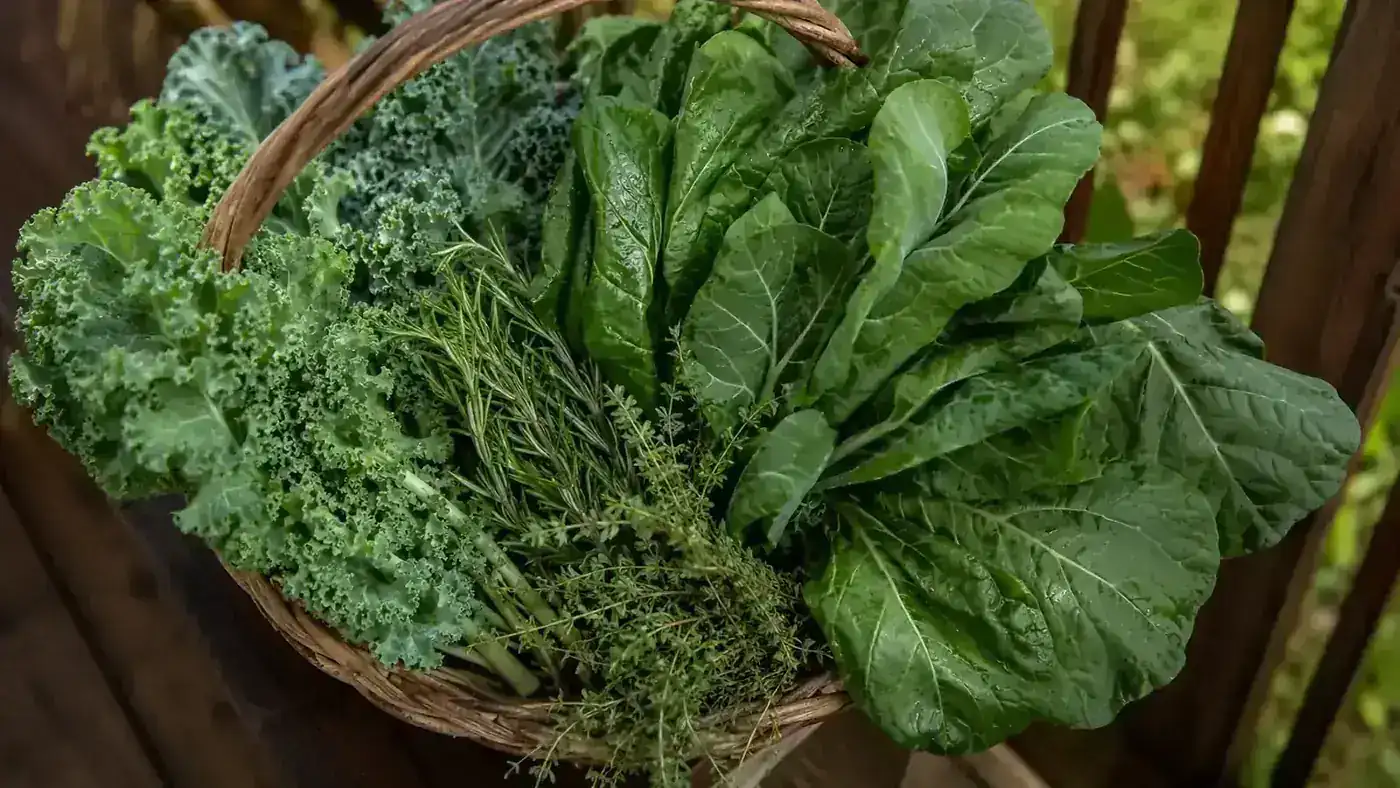
Rosemary is where this tool earns its keep in my kitchen. I use it constantly, roasted potatoes, a marinade for chicken thighs, a garnish over white bean soup on cold nights. Before the stripper, de-needling a few sprigs of rosemary by running my fingers down the stem left my fingertips sore and green-smelling for an hour. With the stripper, a six-inch sprig takes about two seconds and my fingers never touch the needles directly.
Kale and collards are a different kind of test, since what you're removing is a thick rib, not fine leaves. The stripper handles a standard collard leaf well if I feed it in from the stem end and pull straight down, the rib comes free and the leaf stays mostly intact for rolling or chopping. Where it struggles is on the very thickest, oldest collard leaves from late in the season, where the rib has gotten almost woody itself. On those I still finish with a knife, maybe one leaf in ten.
Thyme is nearly effortless, similar to rosemary but even faster since the leaves are smaller and less resistant. Basil and mint I actually don't strip with this tool much, since I usually want whole leaves for those and hand-picking works better, but on the rare occasion I need a big batch stripped for a pesto, the middle-sized hole does the job in under a minute for a full bunch.
The Tradeoffs Nobody Mentions in the Five-Star Reviews
Every review I read before buying made this sound like a flawless little tool, and after six months I don't think that's quite honest. The smallest hole, meant for the finest herbs, is tight enough that if you're not paying attention you can jam a stem partway through and have to back it out, which wastes more time than it saves on a bad night. It took me a solid two weeks of regular use before I stopped fumbling with hole selection on the first try.
It's also a single-purpose tool in a kitchen that already has plenty of single-purpose tools. If you cook with fresh herbs occasionally, once every week or two, the return on a drawer slot might not feel worth it, since a knife works fine at that frequency. This tool earns its keep through repetition, which is exactly my situation but might not be yours.
Lastly, it doesn't do anything for dried herbs, obviously, and it's not built for de-stemming something delicate like cilantro, where you often want the tender upper stems left on for flavor. I still hand-pick cilantro. The stripper is genuinely built for firmer herbs and leafy stems, not everything in the produce drawer.
Alternatives I Tried Before This One
Before the Luxiv, I went through two plastic herb strippers I picked up at a big-box store for around the same price, and neither one made it past the four-month mark. One cracked at the largest hole after being run through the dishwasher maybe thirty times, and the crack eventually split all the way to the edge, which meant leaves just slid out the side instead of stripping clean. The other kept its shape but the hole edges got rough enough over time that they started shredding kale leaves instead of pulling the rib free, which defeated the whole point. I also tried just using a fork, sliding stems through the tines, which works in a pinch but is slower and leaves a mess of stray leaves on the counter.
The reason I landed on the Luxiv after those two failures was simple: it's the only one at this price with a fully metal body and nine holes instead of four or five. More holes meant fewer compromises on any single herb, and stainless meant I wasn't betting on plastic surviving another season of dishwasher cycles. Six months later, that bet has paid off. I compare it more directly to one other stainless competitor, the Joie leaf stripper, in a separate side-by-side if you're deciding between the two.
What I Liked
- Nine graduated holes handle everything from rosemary needles to collard ribs
- Solid stainless steel with zero rust after six months of dishwasher cycles
- Strips a full bunch of rosemary or thyme in a few seconds
- No plastic parts to crack or degrade over time
- Comfortable one-handed use, easy on tired hands after a long shift
Where It Falls Short
- Smallest hole struggles with thick, woody stems and needs a second pass
- Not suited for delicate herbs like cilantro where you want tender stems left on
- Takes a couple weeks to learn which hole fits which herb by feel
- Low value if you only cook with fresh herbs occasionally
It's not a flashy tool. It's just the one that's still in my crock, still working, six months after I almost didn't bother buying it.
Who This Is For
This is built for people who cook with fresh herbs on a real, ongoing basis, gardeners like me who bring in rosemary, thyme, kale, and collards more nights than not, or anyone who buys fresh herb bunches at the store regularly and is tired of picking leaves off by hand. If you batch-cook on your days off, like I do around my shift schedule, having a tool that turns a five-minute stripping job into a thirty-second one adds up fast over a week. It's also worth it if your hands get tired easily, whether from a physical job like mine or from arthritis, since the pull motion takes almost no grip strength.
Who Should Skip It
If fresh herbs make a rare appearance in your cooking, a garnish here and there, this is one more single-purpose gadget you'll forget you own. And if most of your herb use is delicate leaves like cilantro or basil where you want the leaf whole and undamaged, your fingers will serve you better than any stripper on the market, this one included. If you only cook dried herbs from the spice rack, there's simply nothing here for you to strip in the first place.
Six months of nightly use later, this is still the tool I reach for first.
If rosemary, thyme, kale, or collards show up in your kitchen more than once a week, the Luxiv stripper pays for itself in saved prep time within the first month. See current pricing and stock on Amazon.
Amazon Check Today's Price on Amazon →