
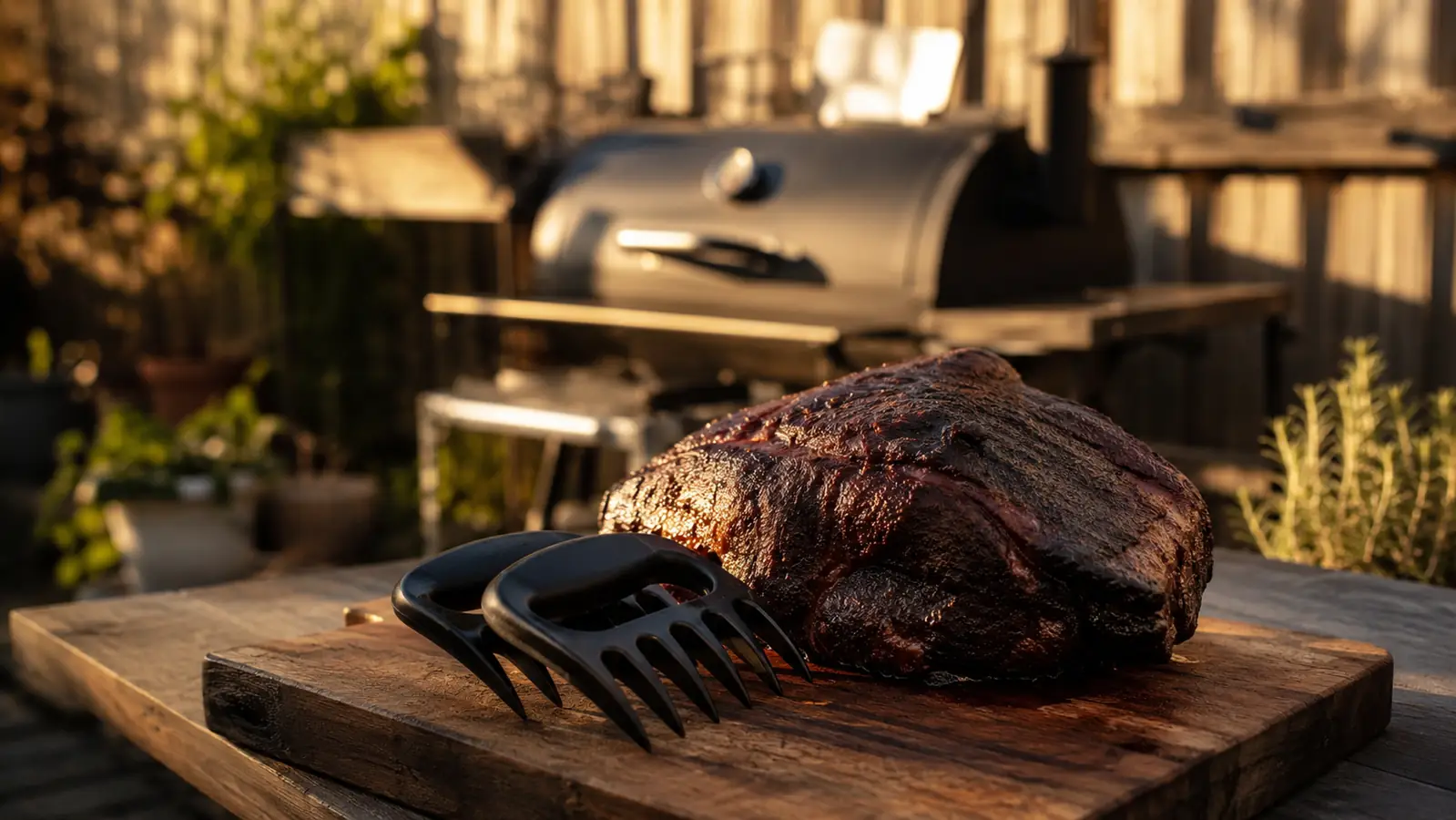
I work three 12-hour shifts a week in the ER, and the other four days I am usually in my garden or standing over my Traeger. Sunday is smoker day at my house, has been for going on four years now, and for most of that time I shredded pork the same way everyone taught me to: two forks, pulling in opposite directions, swearing under my breath while my forearms burned and grease ran down my wrists. In January I finally bought a pair of Bear Paws meat claws after my neighbor Denise handed hers over the fence so I could try shredding a chicken with them at her cookout. It took me ninety seconds, standing right there on her patio. I ordered my own set that night before I even got home.
Six months later I have used these claws on something like twenty pork butts, a dozen whole smoked chickens, four briskets, and one memorable batch of jackfruit for my sister-in-law who does not eat meat but still wants the pulled-pork sandwich experience at our family cookouts. This review is what actually happened to a $14.99 pair of plastic-and-stainless claws after half a year of real, repeated, sweaty backyard use, not a first-week impression written the day the box showed up.
The Quick Verdict
A genuinely useful, durable tool that shreds meat faster and safer than forks, with a small learning curve on grip and a real limit on very lean or very small cuts.
Amazon Check Today's Price →Tired of fighting a pork butt with two forks?
The Bear Paws claws are built for exactly this. Check today's price on Amazon and see if they're in stock.
Amazon Check Today's Price on Amazon →How I've Used It
My first real test was a 9-pound Boston butt, smoked low and slow at 225°F for just over 10 hours until it hit 203°F internal, which is my usual target for shredding without it turning to mush. I pulled it off the smoker, let it rest wrapped in foil inside a cooler for 45 minutes, and then went at it with the claws still warm to the touch. It took under 4 minutes to fully shred the whole shoulder, bone included, into strands I could serve straight away. With two forks that same butt used to take me 12 to 15 minutes and left my hands cramping for the rest of the afternoon.
Since then the claws have become part of my actual routine, not a novelty. I keep them in the drawer next to my instant-read thermometer, and they come out for whole smoked chickens (my favorite use, honestly, since the meat comes apart cleanly around the bone), for brisket flat when I want shredded rather than sliced barbecue for sandwiches, and even for that jackfruit experiment, which surprised me by working almost as well as pork.
The one place I did not expect to use them was inside, on a rotisserie chicken from the grocery store on a Tuesday when I got home from a double shift and did not have the energy to hand-pull chicken for tacos. That is probably the moment I decided these were staying in permanent rotation instead of getting shoved to the back of a drawer like so many gadgets I have bought and abandoned over the years, the melon baller and the avocado slicer among them.
I even brought them out this spring when my rosemary and thyme finally came in from the garden. A pork shoulder rubbed with fresh herbs from my own beds and shredded straight into the pan with the claws felt like the whole loop closed, grow it, smoke it, pull it, plate it, without a single store-bought shortcut in the middle.
The Grip and the Build
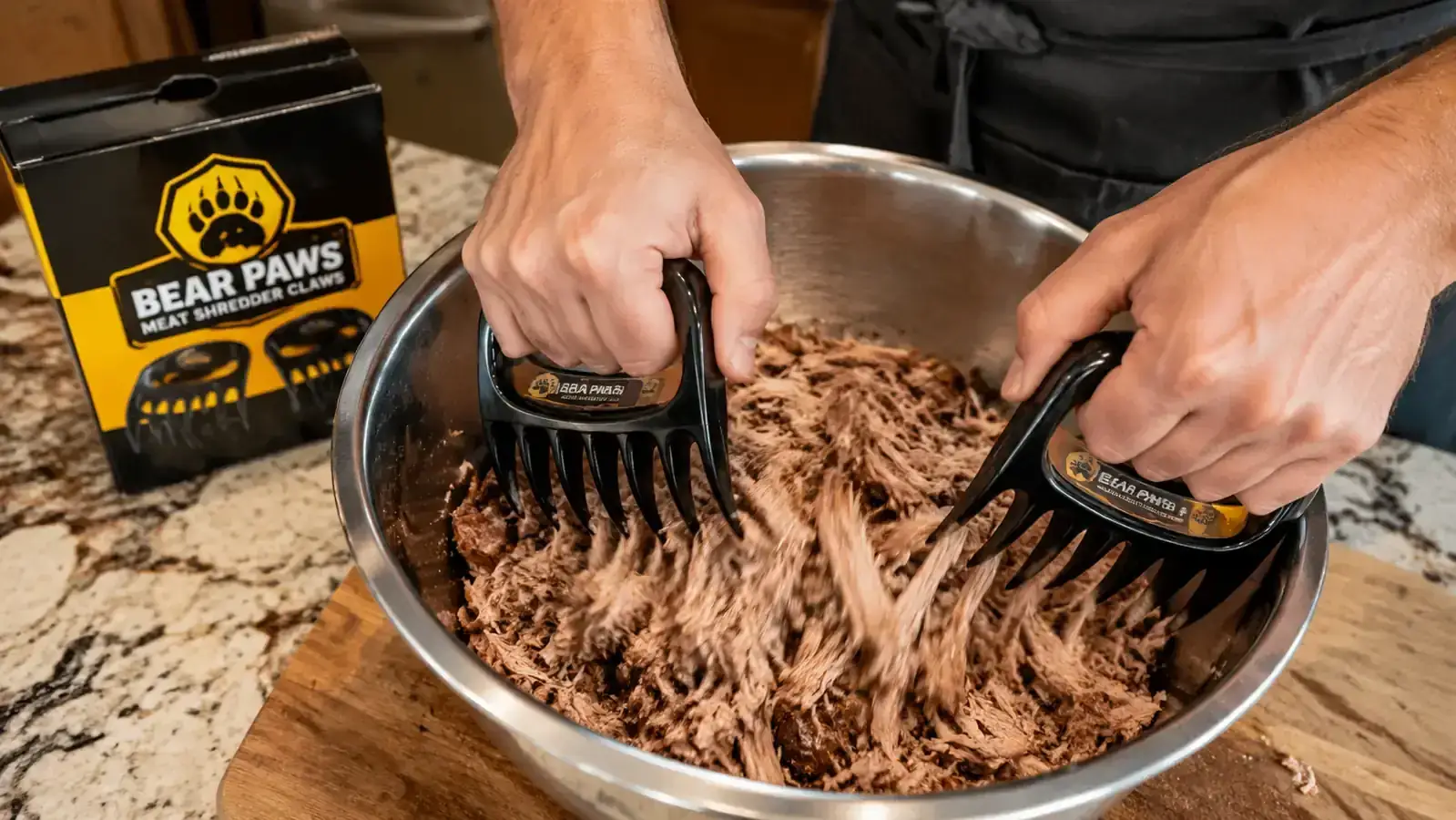
The claws are shaped like a wide oven mitt with five curved stainless steel prongs on the working end and a solid ABS plastic shell that covers your hand and forearm. Bear Paws lists them as heat resistant, and in my experience that holds up to a point. I have used them straight off the smoker at meat temperatures around 190 to 205°F without any melting, warping, or smell of hot plastic, which was my biggest worry the first time.
Where I would push back a little on the marketing is the idea that you can use these as actual oven mitts to pull a hot pan out of a 400°F oven. I would not. The plastic gets warm enough to notice through the shell after a minute or two of contact with something that hot, and I keep separate silicone mitts for pan duty. Think of these as meat-handling tools that happen to tolerate smoker and grill heat, not general kitchen mitts, and treat the difference seriously if you have kids underfoot near the counter.
The prongs themselves have stayed sharp enough to dig into a pork shoulder and separate it along the grain, which is really the whole trick to good pulled pork, shredding with the grain instead of against it. After six months and roughly 35 uses, I checked the prongs against a photo I took the first week with my phone. No visible bending, no rust spotting near the rivets, no chips in the stainless. My hands are on the smaller side and the interior fits snugly without sliding around mid-shred, which matters more than it sounds like when the meat is still hot and you need real control.
Speed Versus Two Forks
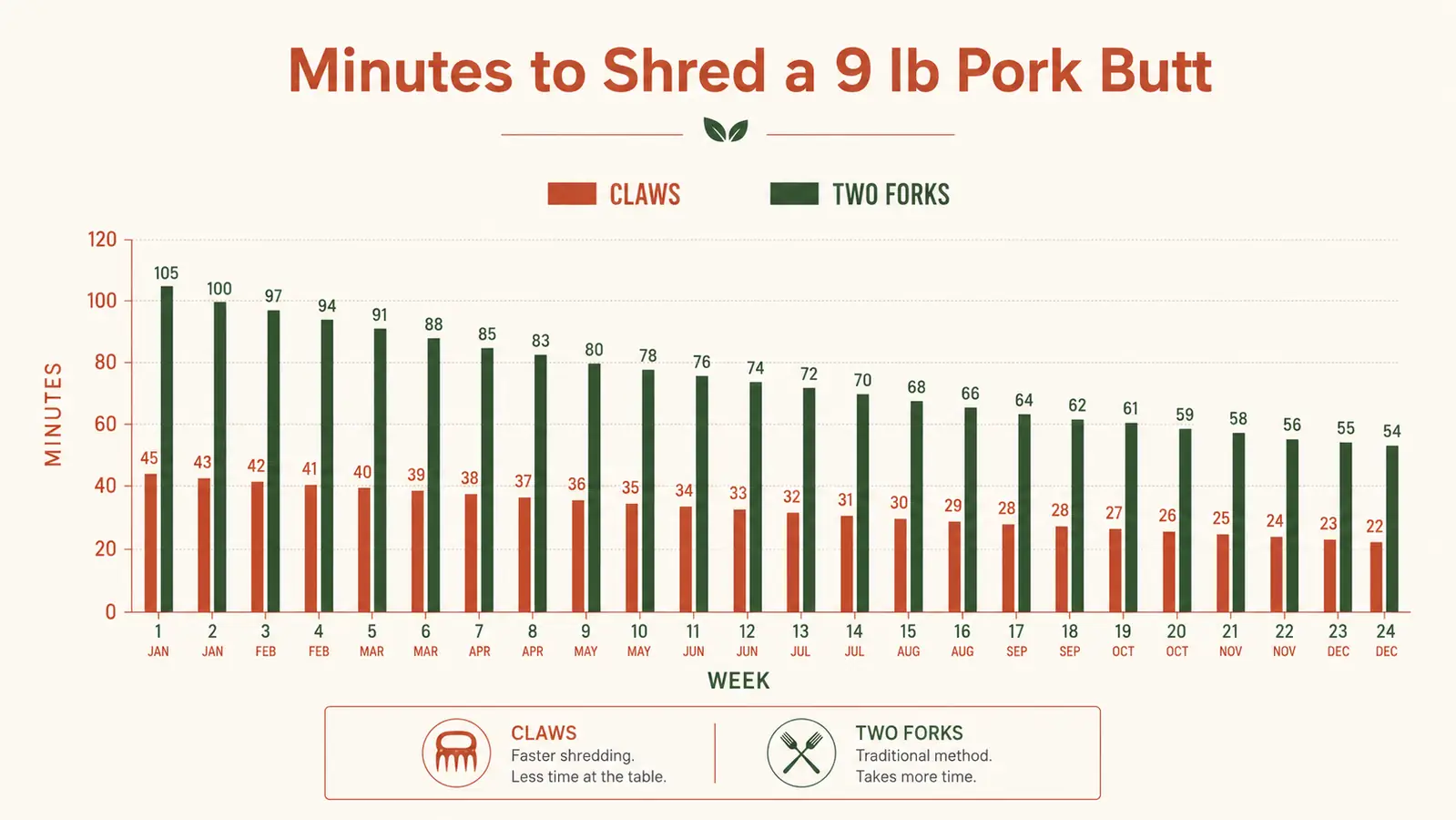
I actually started timing myself around month two, partly out of curiosity and partly because my husband Rich did not believe the claws were faster than forks and I wanted proof. Over a dozen separate Sundays I tracked how long it took to fully shred a similarly sized pork butt (between 8 and 10 pounds each time) with the claws versus with two forks, which I still keep on hand for comparison and for the rare small job.
The claws consistently finished in 3 to 5 minutes. Forks averaged 11 to 16 minutes on the same size cut, and that gap actually widened as the meat cooled, since forks lose their bite on firmer, cooler meat while the claws keep working. On a day when I am trying to get eight sandwiches plated before my in-laws show up at noon, that difference matters more than it sounds like on paper.
The other advantage that does not show up in a stopwatch is my hands at the end of the job. Two forks for 15 minutes left my wrists sore, and after a 12-hour shift on my feet the day before, that soreness lingered into Monday. The claws distribute the pulling motion through your whole forearm instead of your fingers, which is a small thing until you are doing it every week for months on a body that already spends 36 hours a week standing at a bedside.
Durability After Six Months
I run mine through the dishwasher top rack after almost every use, which the packaging says is fine, and I have not had a problem with that so far. The plastic shell has not cracked, faded, or gone cloudy in a way that suggests heat damage. The one maintenance note I would flag is that meat fibers and rendered fat can get packed between the prongs and the plastic base, and the dishwasher does not always get every bit of it out on its own. I keep a small brush by the sink now and give the base a scrub under hot water before they go in the dishwasher, which solved the issue completely.
I have dropped one claw on my tile floor twice, once loaded with hot pork, and neither the plastic nor the prongs cracked or bent. That is more than I can say for a couple of plastic tongs I have gone through in the same time period, both of which snapped at the hinge within a year. For a $14.99 pair of tools used weekly, I consider that a real durability win, not just a lucky streak.
Alternatives I Considered First
Before I bought these I tried a couple of other approaches, mostly out of stubbornness about not wanting to buy a single-purpose gadget. The stand mixer paddle method, where you drop the whole butt into a mixer bowl and run it on low, works, but it turns the meat into shreds that are almost too fine and mushy for my taste, and cleaning bits of pork out of a stand mixer paddle is its own chore.
I also looked at a cheaper generic claw set at my local grocery store, priced a dollar less, before going with Bear Paws specifically. Denise had warned me the off-brand ones she tried first had prongs that bent within a couple months of regular use, which is exactly the failure point I wanted to avoid given how often I planned to use these. Six months in in my own kitchen, avoiding that problem was worth the extra dollar.

Where It Falls Short
These claws are built for pulling meat apart, and they are noticeably worse at anything else. I tried shredding a piece of salmon with them once out of laziness and it was a mess, the prongs are too widely spaced and too aggressive for flaky fish. Save those for a fork.
Very lean cuts also give the claws less to grip. A lean turkey breast shredded fine but took more passes and effort than a fatty pork shoulder, since there is less connective tissue and fat holding strands together for the prongs to catch. And if you are only ever cooking for two people, shredding a single chicken breast with these feels like using a chainsaw to cut a birthday candle. They shine on bigger cuts fed to a crowd.
What I Liked
- Shreds a full pork butt in under 5 minutes versus 12+ with forks
- Handles smoker and grill heat (up to roughly 200°F) without melting or warping
- Stainless prongs have shown zero bending or rust after 6 months of weekly use
- Reduces hand and wrist strain compared to fork-pulling
- Dishwasher safe with a quick manual rinse first
Where It Falls Short
- Not a true oven mitt, gets warm around 400°F+ direct oven contact
- Struggles with flaky fish and very lean, small cuts
- Meat fibers can pack into the prong base and need a manual scrub before the dishwasher
- Overkill if you rarely cook meat for more than 2 to 3 people
The stopwatch never lied. Claws averaged under 5 minutes on a 9-pound butt. Forks never once broke 11.
Who This Is For
If you smoke or roast meat regularly, even just most Sundays like I do, this is a genuinely useful tool that earns its drawer space. It is also a good fit if you cook for a crowd, whole chickens, pork shoulders, brisket for a family gathering or a potluck, since the time savings compound when you are shredding several pounds at once. Anyone dealing with hand or wrist strain from repetitive kitchen tasks will likely notice the difference too. I noticed it most on weeks I had already worked three shifts in a row and had nothing left in my grip by Sunday afternoon.
Who Should Skip It
If you almost never cook large cuts of meat, if your household is one or two people and dinner rarely involves more than a chicken breast, or if your cooking leans toward fish and delicate proteins, you probably will not get enough use out of these to justify the drawer space. A regular fork will do the job for occasional, small-batch shredding just fine, and there is no reason to add another tool to a kitchen that does not need it.
Six months in, still my go-to for smoker Sundays.
If pulled pork, shredded chicken, or brisket sandwiches are a regular thing at your house, these earn their keep fast. Check today's price on Amazon.
Amazon Check Today's Price on Amazon →