
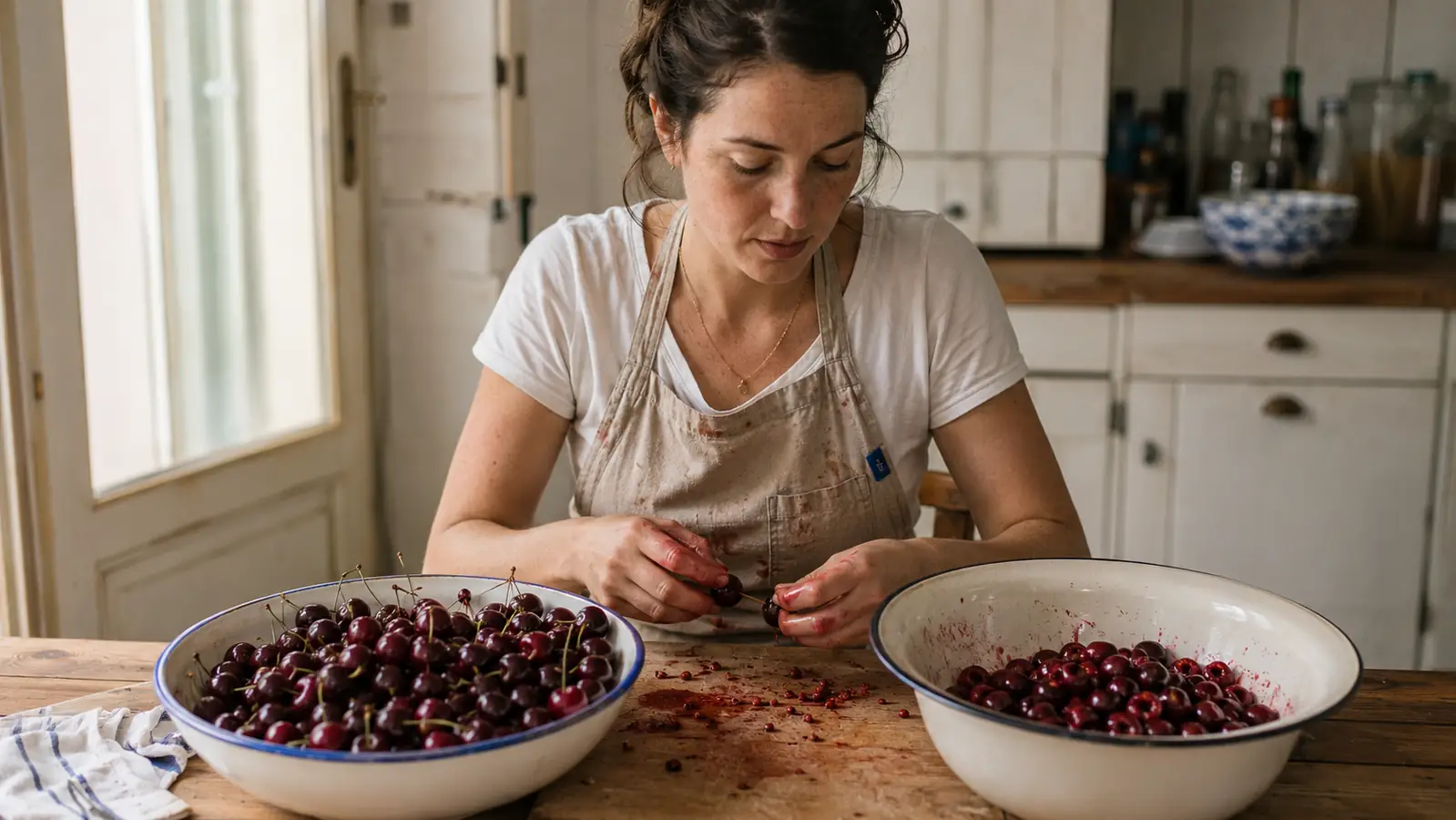
I bought the EddHomes 7-in-1 cherry pitter two summers ago after my neighbor Denise dropped off a lug of Bing cherries from her backyard tree, close to eighteen pounds worth, and told me to can as much of it as I could before it turned. I had exactly one Saturday to do it, wedged between a twelve-hour overnight shift Friday and another one starting Sunday morning, so I didn't have room in my day for a gadget that only sort of worked. Every review I read before ordering made this thing sound like a miracle, no mess, no hassle, pits cherries twice as fast as a knife. Some of that turned out to be true. A lot of it wasn't, and nobody selling this on Amazon is going to volunteer that part.
This isn't my six-month, long-term durability review, that one lives elsewhere on this site if you want the full season breakdown. This is the honest version, the stuff that actually surprised me the first time I sat down with eighteen pounds of cherries, two mixing bowls, and more optimism than sense. If you're about to buy this based on a five-star average alone, read this first, because the average doesn't tell you what your first hour with it will actually feel like.
The Quick Verdict
It genuinely speeds up pitting once you find its rhythm, but the juice mess, the size limits on smaller cherries, and two of the seven attachments are not what the glowing reviews lead you to expect.
Amazon Check Today's Price →Before you order another cherry pitter based on the star rating alone, read this first.
This is what the EddHomes 7-in-1 actually does with a real eighteen-pound batch, mess and all, not the marketing photos. See today's price and current stock on Amazon.
Amazon Check Today's Price on Amazon →How I Actually Tested It
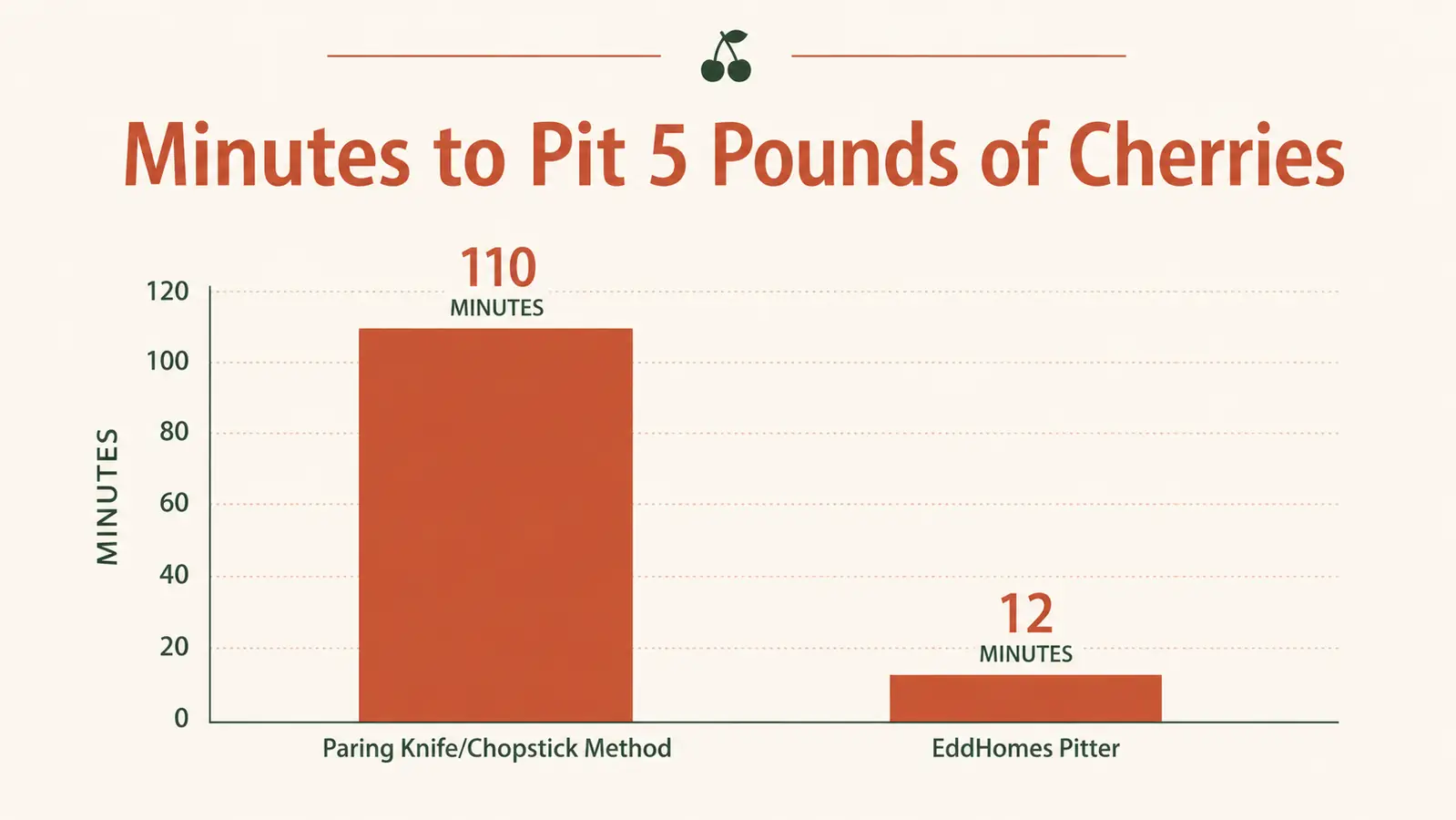
I didn't do a gentle, curated test with a small bowl of perfect cherries for a photo. I sat down with all eighteen pounds at once, split into batches of about five pounds, because that's genuinely how canning day works when someone hands you a full lug and a deadline. I timed myself pitting one five-pound batch by hand, using the old chopstick-through-a-bottleneck trick my mother taught me, then timed a second five-pound batch with the EddHomes pitter, then alternated for the rest so fatigue wouldn't skew either method unfairly.
I also paid attention to things a stopwatch doesn't capture: how much juice ended up somewhere other than the bowl, how often I had to stop and rinse the tool, whether the pit came out clean or dragged flesh with it, and how my hands felt after two hours of repetitive squeezing. I work with my hands all day at the hospital, so a tool that leaves them sore isn't a small complaint for me, it's a dealbreaker.
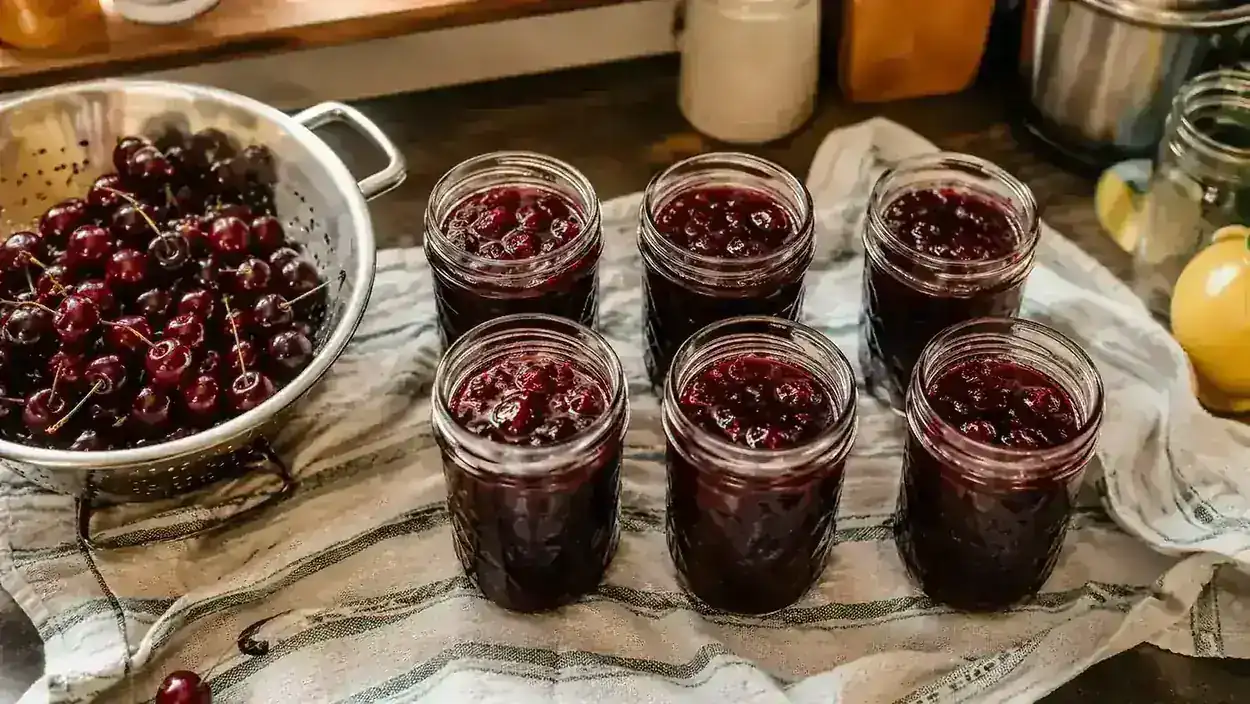
By the end of that Saturday I had six pints of cherry preserves, four bags of pitted cherries in the freezer for winter smoothies, and a fairly clear picture of where this fifteen-dollar tool earns its keep and where it doesn't. None of what follows is theoretical. It's what happened at my own kitchen table, written down that same evening while my hands still smelled like cherries and my shirt still had the proof on it.
The Mess Nobody Warns You About
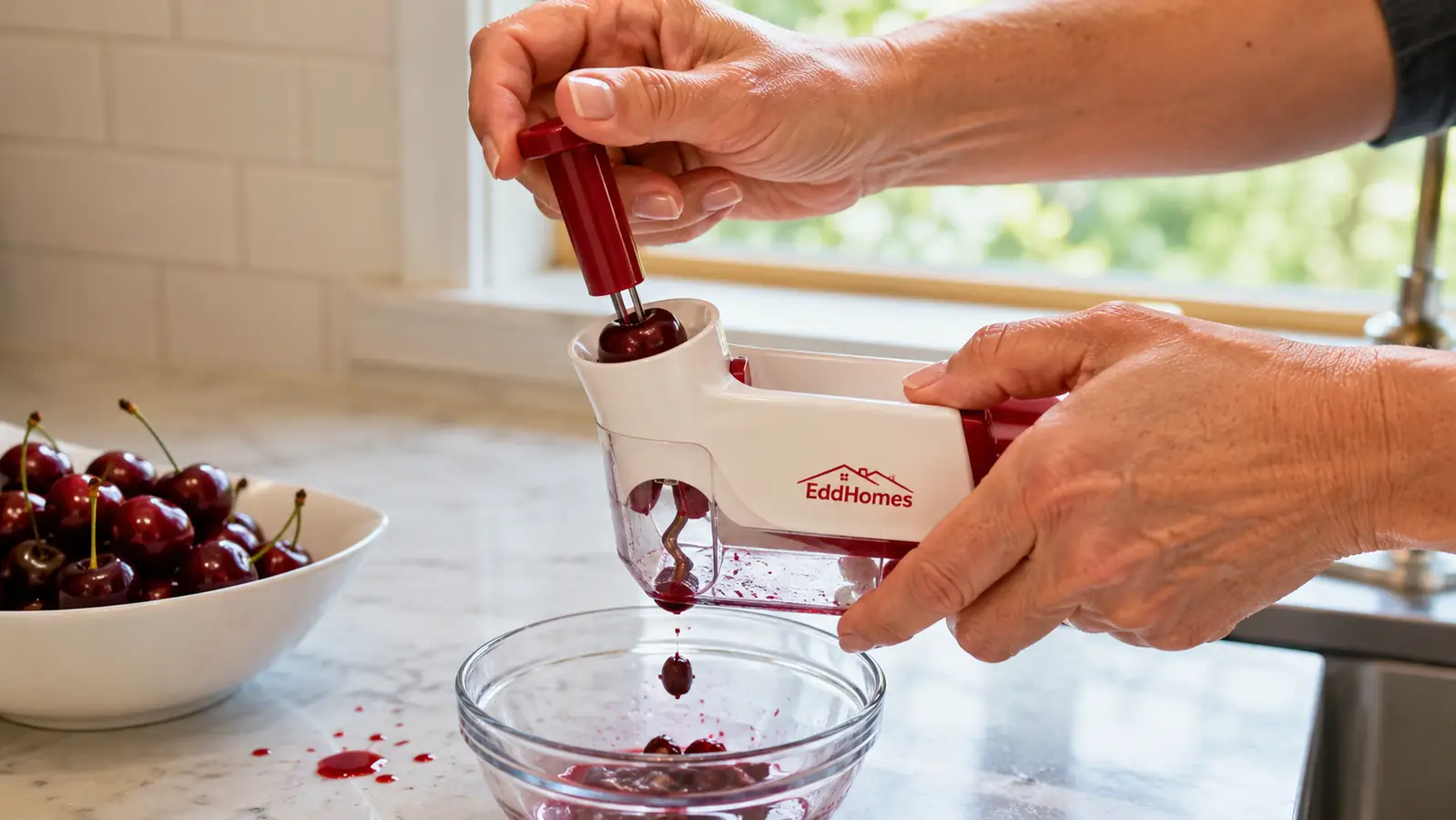
Here's the part almost every review skips: this tool sprays juice. Not constantly, and not in a way that ruins your kitchen, but enough that I wish someone had told me to wear an apron and clear the counter of anything I cared about before I started. The plunger action forces the pit out under real pressure, and if a cherry is even slightly overripe, juice comes out sideways along with the pit. By the end of my first five-pound batch, I had faint pink freckling on my forearms, the front of my shirt, and a two-foot radius of my counter.
I solved this for the rest of the day with a folded kitchen towel taped loosely around the base of the pitter's cup, which caught most of the splatter, plus an actual apron instead of the dish towel tucked in my waistband I usually rely on. It's not a dealbreaker, but it's a real difference from the tidy demo videos, and I'd rather you know before your first batch than find out the way I did, mid-splatter, over a white shirt I'd forgotten I was still wearing from my shift.
The bowl placement matters more than I expected too. Position it too far under the pitter's chute and pits bounce off the rim instead of dropping in. Position it too close and juice pools around the base and drips down the outside. It took me almost a full pound of cherries to find the right distance, which is a small thing, but it's exactly the kind of detail that never makes it into a five-star Amazon review written after someone's first ten cherries. I finally settled on a shallow glass bowl set just slightly forward of center under the chute, and that alone cut my cleanup time roughly in half for the rest of the day.
The Size Problem: Not All Cherries Fit the Same
The Bing cherries from Denise's tree were mostly on the larger side, and those worked well in the pitter's cup, centered nicely, held steady, pitted clean. But she'd also thrown in a smaller bag of sour pie cherries from a second tree, and those told a different story. Anything noticeably smaller than a standard grocery-store Bing cherry tends to shift inside the cup when the plunger comes down, which means the pit gets pushed out at an angle instead of straight through, sometimes leaving a ragged tear in the flesh instead of a clean hole.
I ended up sorting my cherries into two piles before I started, large ones for the pitter and smaller ones I finished by hand with the chopstick method, which took extra time I hadn't planned for. If your cherry source is inconsistent in size, which is common if you're working from a home tree or a farmers market flat rather than a uniform grocery bag, budget for some hand-finishing. The tool is not a universal fit for every cherry that comes off a branch, and pretending otherwise just slows your whole session down.
Rainier cherries, which run a bit smaller and softer than Bing, gave me the messiest results of the whole day. The flesh is more delicate, and the plunger's pressure sometimes crushed the top of the cherry before the pit fully released. If Rainiers are your main cherry, know going in that this tool handles them worse than it handles a firm Bing or Montmorello or Montmorency, and you may end up with more juice loss and mangled fruit than you'd get pitting them carefully by hand.
The Other Six Attachments: Mostly Marketing
The listing calls this a 7-in-1 tool, and technically it comes with interchangeable heads for cherries, olives, and a couple of other small stone fruits, plus a strawberry huller attachment. After using all of them, I think the honest count of attachments I'd actually reach for again is two: the cherry head, obviously, and the strawberry huller, which genuinely works well and saved me real time on a batch of jam later that same summer, easily hulling a full quart of berries in a few minutes.
The olive pitting attachment felt like an afterthought. I tried it on a jar of large green olives and it struggled the same way it struggled with small cherries, the olive shifted in the cup and the pit came out crooked more often than not. I wouldn't buy this tool specifically for olives. If that's your main use case, a dedicated olive pitter will serve you better and save you the frustration of fighting a cup that wasn't really sized for the job.
The remaining attachments marketed for other stone fruits felt like padding on the product listing rather than genuinely useful tools, more of a checkbox for the '7-in-1' label than something I'd reach for in a real kitchen. If you're buying this specifically because the number seven sounds like more value, temper your expectations. You're really buying a good cherry pitter with a bonus strawberry huller, and that's a fair trade at this price, just not quite the seven-tool arsenal the box implies.
Speed: Where It Actually Delivers
Here's the genuinely good news, because this review isn't a takedown. Once I sorted cherries by size and got my bowl placement right, the pitter was noticeably faster than hand-pitting for the large Bing cherries, which made up most of my batch. My hand-pitted five-pound batch took me just under twenty-two minutes with the chopstick method. The same size batch with the EddHomes pitter, once I'd found my rhythm on the second batch, took about thirteen minutes. That's a real, meaningful difference when you're staring down eighteen pounds of cherries and a shift that starts in the morning.
The speed advantage compounds the longer you go too, because hand-pitting fatigues your fingers in a way that slows you down as you go, while the pitter's motion stays consistent whether it's cherry number ten or cherry number three hundred. By my fourth batch of the day, my hand-pitting time on a comparison batch had crept up past twenty-five minutes from fatigue, while the pitter stayed right around thirteen, sometimes fourteen minutes flat. Across the full eighteen pounds, that gap saved me close to forty-five minutes total, which on a day sandwiched between two shifts felt like a genuine gift.
Cleaning Between Batches
One thing that surprised me is how quickly the pit chute clogs with pulp and juice residue if you don't stop and rinse it. After roughly every pound and a half of cherries, I noticed the plunger starting to stick slightly, and a quick rinse under the tap cleared it every time. Skip that step and you'll feel more resistance on the plunger, and eventually a stem or bit of skin gets lodged and you have to stop and dig it out with a toothpick, which happened to me twice over the course of the day.
It comes apart easily enough for a full wash between sessions, and it's dishwasher safe according to the listing, though I hand-wash mine because I've found the plunger spring holds up better that way over time. Neither of these is a major flaw, but if you go in expecting a tool you can run nonstop for two hours without a pause, you'll be frustrated. Build the rinse breaks into your workflow from the start, and treat them the way you'd treat wiping down a knife between cutting different foods, just part of the process, not an interruption to it.
What I Liked
- Meaningfully faster than hand-pitting once you find the right cherry size and bowl placement
- The strawberry huller attachment is a genuine bonus, not just filler
- Comes apart easily for cleaning between batches
- Handles large, firm Bing cherries cleanly with minimal tearing
- Affordable enough that the learning curve doesn't feel like wasted money
Where It Falls Short
- Sprays juice more than any review photo suggests, plan for an apron and a cleared counter
- Struggles with smaller or softer cherries like Rainiers, tearing the flesh instead of cleanly ejecting the pit
- Several of the '7-in-1' attachments feel like marketing padding rather than genuinely useful tools
- Pit chute needs a rinse roughly every pound and a half or the plunger starts sticking
- Olive attachment underperforms compared to a dedicated olive pitter
It's a good cherry pitter with one great bonus attachment, not the seven-tool miracle the box wants you to believe you're getting.
Who This Is For
This tool makes the most sense for people who process real quantities of cherries at once, whether that's a home tree that dumps a lug on you every July like Denise's does, a farmers market flat you're turning into preserves, or a habit of freezing pitted cherries for smoothies through the winter. If your cherries tend to run medium to large and reasonably firm, you'll get the speed benefit without fighting the size problems I hit with the smaller sour and Rainier varieties. It's also a solid pick if you already make strawberry jam, since the huller attachment genuinely pulls double duty and means one tool covers two jobs in your canning kit.
Who Should Skip It
If you only pit a handful of cherries a few times a summer for a fruit salad or a garnish, hand-pitting with a chopstick or a paring knife will serve you just as well without adding another single-purpose tool to your drawer. Skip it too if your cherries are consistently on the small side, since you'll spend as much time sorting and hand-finishing as you save with the tool itself. And if you were hoping for a genuine seven-in-one workhorse for olives and other stone fruits, know that most of those attachments underdeliver, and you're better off buying dedicated tools for those jobs instead of counting on this one to cover everything.
Eighteen pounds of cherries taught me more about this tool than any five-star review did.
If your cherries run medium to large and you're processing real quantities, not just a handful, this pitter earns its place at the counter. See current pricing and availability on Amazon.
Amazon Check Today's Price on Amazon →