
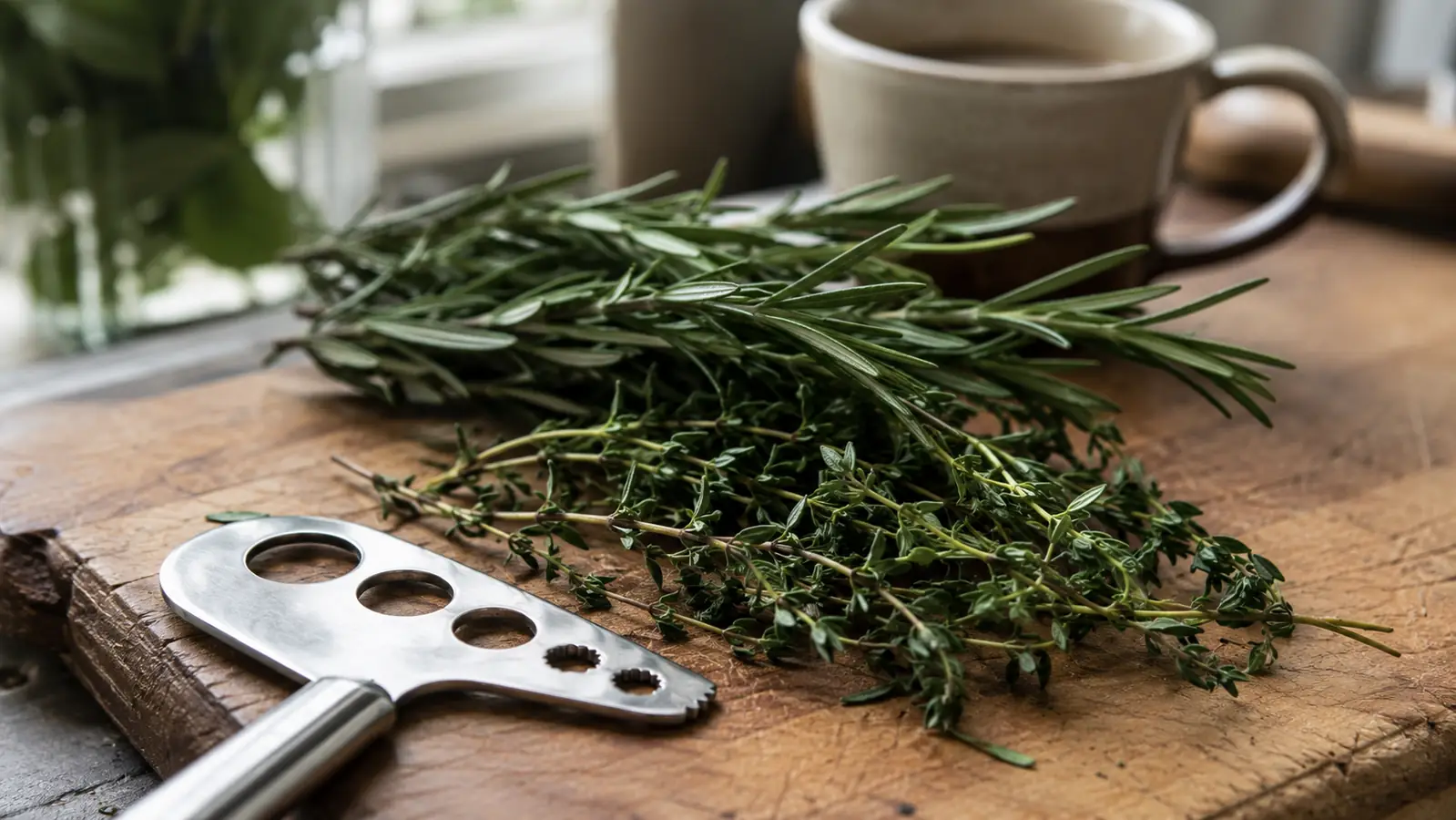
I work three 12-hour shifts a week at the hospital, and on my days off I'm usually out at the raised beds before the coffee's even cooled. Between the rosemary hedge that's gotten out of hand and the collard greens that come in by the armload every October, I don't have twenty minutes to sit at the counter picking leaves off stems with my fingernails. That's the whole reason I started using a herb stripper, and it's the one gadget from my kitchen drawer that made it out to the porch table too, because I use it that often.
This isn't a review. It's the actual method I use, start to finish, to get a full garden harvest, rosemary, thyme, kale, collards, off the stem and into a bowl without turning my hands green or bruising the leaves into mush. It takes about ten minutes total for a normal harvest basket, and most of that time is rinsing, not stripping. Before I found a stripping tool that actually worked for both woody herbs and leafy greens, I was doing this by hand, one leaf at a time, and it ate into the little bit of cooking time I have between shifts. I tried the glove trick a coworker swore by, running a gloved hand down a rosemary stem, but it only ever worked half the time and left needles scattered across the counter instead of in a bowl.
Skip the fingernail method. A 9-hole herb stripper does it in one pull.
This is the tool I reach for every single time I bring in a harvest. Nine graduated holes handle everything from thin thyme sprigs to thick collard stems, and it's dishwasher safe when you're done.
Amazon Check Today's Price on Amazon →Step 1: Sort Your Herbs by Stem Type Before You Start
Before I touch the Luxiv herb stripper, I sort what's in the basket into two piles: woody stems and leafy stems. Rosemary, thyme, and oregano are woody, they'll snap rather than bend, and the needles or small leaves cling tight to the stem. Kale, collards, and chard are leafy, with one wide leaf attached to a thick central rib instead of dozens of small leaves along a branch. The reason this matters is that a herb stripper has nine holes of different diameters, and you'll waste time and bruise leaves if you grab the wrong size for the job in front of you.
I keep the woody stuff in a small bowl on the left side of the cutting board and the big leafy greens in a colander on the right. It takes maybe ninety seconds to sort a full harvest basket this way, and it means I'm not stopping mid-task to dig through a pile looking for the next rosemary sprig while my hands are already wet and covered in leaf bits. On a night when I've come home from a shift and just want dinner started, that ninety seconds of sorting is the difference between a smooth ten minutes and a frustrating twenty.
Step 2: Match the Hole Size to the Stem
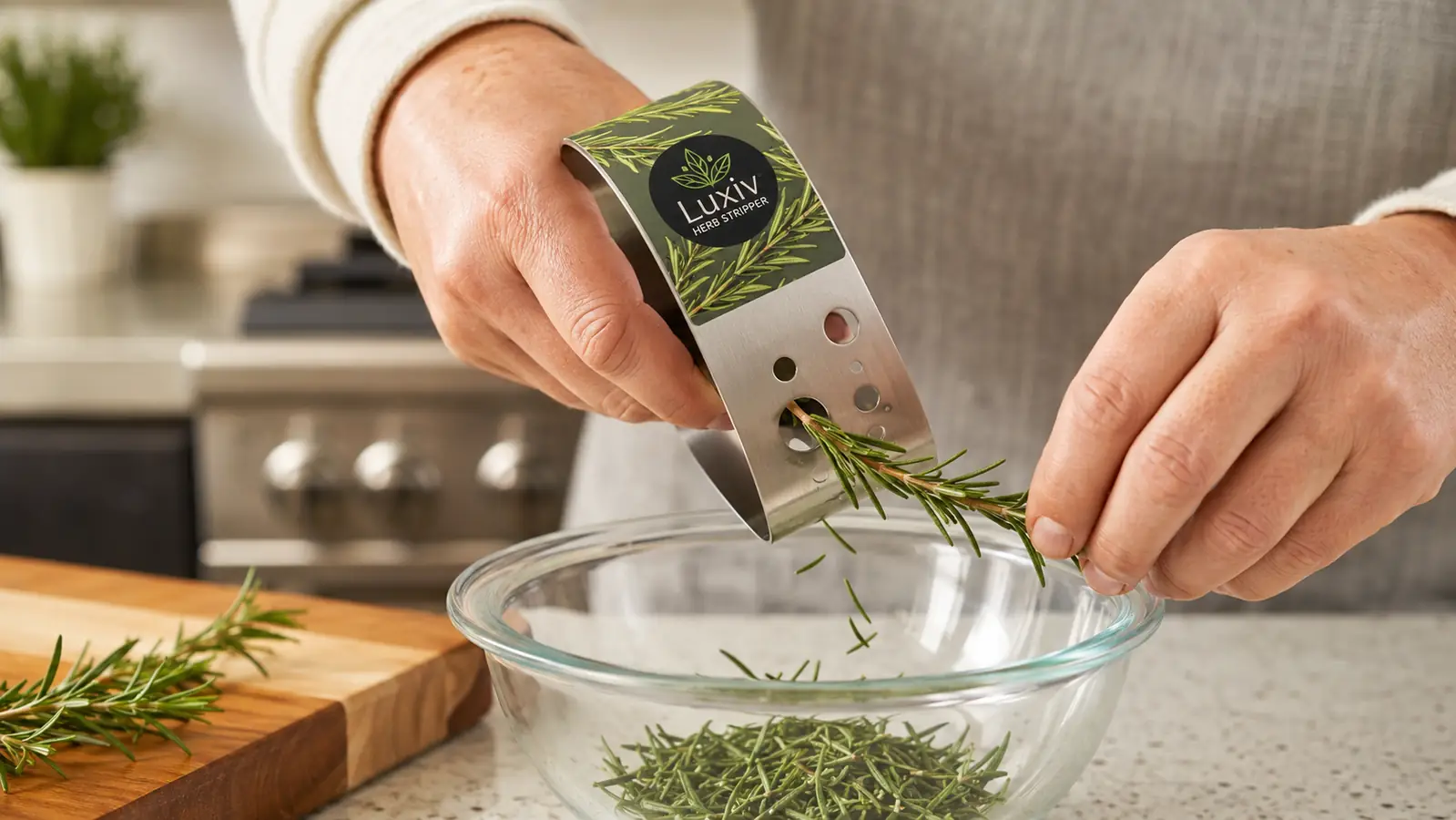
The Luxiv stripper I use has nine holes ranging from about 3mm up to nearly 20mm, arranged smallest to largest around the ring. For rosemary and thyme, I use one of the three smallest holes, just big enough that the stem slides through but the needles catch on the rim and get pulled off cleanly. For collard greens and kale, I go to one of the largest two holes since the rib on a mature collard leaf can be as thick as a pencil, sometimes thicker on the oldest leaves at the base of the plant.
Guessing wrong is the number one reason people think a herb stripper doesn't work well. If the hole is too small for a collard rib, you'll shred the leaf instead of separating it clean, and you'll end up with torn scraps instead of usable greens. If it's too big for a thyme sprig, the whole stem just falls through without catching any leaves at all, and you're left holding a bare twig wondering what happened. Test on one stem first before you run through a whole bunch. It takes two seconds and saves you from stripping half a harvest wrong and having to pick torn leaves out of the bowl afterward.
If you're not sure which hole to start with, go one size smaller than you think you need. It's easier to notice a stem sticking rather than sliding through and bump up a size than it is to undo a shredded leaf. I keep a mental note of which hole I use for each herb from one harvest to the next, rosemary in the second-smallest, thyme in the smallest, kale in the second-largest, collards in the largest, so I'm not re-testing every single time I bring in a fresh basket.
Step 3: Pull From the Cut End Toward the Tip
Direction matters more than people expect when they first pick up a herb stripper. I hold the tip of the sprig in one hand, feed the cut, or bottom, end through the correct hole, and pull the stem down and through in one smooth motion, away from the leaves. Pulling this direction works with the natural grain of how leaves attach to the stem, so they release clean instead of tearing against the direction they grew in.
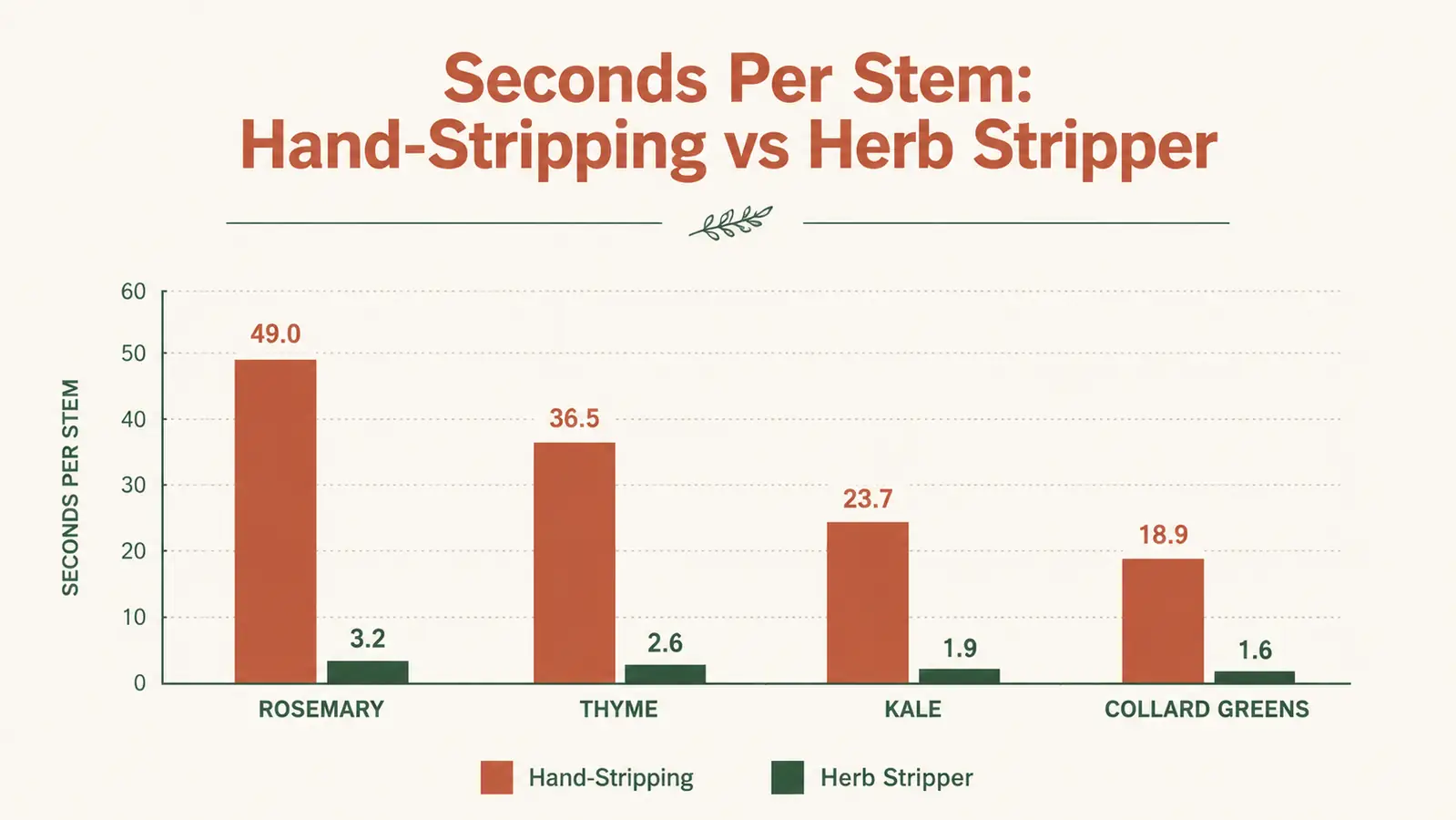
For a rosemary sprig about six inches long, this is one pull, maybe two seconds, and the needles drop straight into the bowl below. For thyme, which has more delicate leaves, I slow down just slightly, maybe a one-second pull instead of a fast yank, because thyme leaves bruise if you rip them too hard, and you'll smell it immediately. Bruised thyme has that slightly bitter, flattened smell instead of the bright, almost lemony note you want in a finished dish. Oregano behaves a lot like thyme here, so the same gentle pull applies. If a stem catches partway through and won't slide, don't force it, back it out and try the next hole size up instead of yanking harder, since forcing a stuck stem is usually what tears leaves in half.

Step 4: Run Kale and Collards Through the Largest Holes, Rib First
Kale and collards work a little differently than the woody herbs. Instead of holding the leaf tip and pulling the stem through, I fold the leaf in half lengthwise along the rib, feed the folded rib into the largest hole on the Luxiv herb stripper, and pull down toward the base. The two halves of the leaf separate from the rib in one motion and drop away, leaving me holding just the tough center stem, which goes straight into the compost bucket instead of the dinner pot.
This is the step that saves the most time on a big harvest day. Stripping a dozen collard leaves by hand with a knife, cutting around the rib on both sides, takes me close to fifteen minutes and dulls a knife blade fast on the tough fibers running through the stem. Running the same dozen leaves through the stripper takes under three minutes, and I'm not standing there with a paring knife worrying about slicing my thumb while I'm tired from a night shift and my hands aren't as steady as they'd be on a rested morning. Kale ribs are a little thinner than collard ribs, so if you're stripping both in the same session, I still run kale through the second-largest hole rather than the biggest one, since a slightly snugger fit keeps the leaves from sliding off to one side before they separate.
For a big fall harvest, twenty or thirty collard leaves at once, I work in batches of five or six so the bowl underneath doesn't overflow with stripped leaves before I've cleared it into the sink. It's a small habit, but it keeps the whole process moving instead of stopping every few minutes to deal with an overflowing bowl mid-strip.
Step 5: Rinse the Leaves, Then Rinse the Tool
Once everything is stripped, I dump the bowl of rosemary needles, thyme leaves, and kale and collard leaves into a salad spinner, rinse under cold water, and spin dry. Stripped leaves dry faster and more evenly than whole sprigs because there's no stem trapping water in the folds, which matters if you're planning to sear or roast anything afterward instead of just tossing the greens into a soup.
The herb stripper itself goes straight into the dishwasher's top rack when I'm done. Stainless steel holds up fine to the heat, and I've never had a hole clog with plant fiber the way I worried it might when I first started using one. If I'm mid-cooking and need it clean fast, a quick rinse and a run under hot water gets any stuck bits of rosemary needle out of the smaller holes in about ten seconds, and a soft brush handles any thyme leaf that gets wedged in a hole edge.
What Else Helps
A sharp pair of kitchen shears is still worth keeping nearby for herbs a stripper isn't built for, basil and cilantro mostly, since those have soft stems and big flat leaves that don't feed through holes cleanly and tend to just fold over instead of releasing. I also keep a small paring knife on hand for the occasional woody rosemary stem that's thicker than any of the nine holes, usually from the base of an older plant that's been in the ground a few seasons. A salad spinner earns its counter space back every single harvest day, since wet stripped leaves in a hot pan just steam instead of crisping or wilting the way you actually want them to. And if you're drying herbs for storage rather than cooking same-day, stripping them first with the herb stripper means they dry flat and even in a dehydrator instead of curling around a stem and drying unevenly.
One more thing I'd add for anyone new to this. Don't strip more than you're going to use in the next day or two unless you're drying or freezing it. Stripped leaves, especially kale and collards, lose moisture faster once they're off the rib, and they wilt in the fridge quicker than a whole intact leaf would. I strip what's going into that night's dinner and the next day's lunch, and I leave the rest of the harvest basket whole in a damp towel in the crisper drawer until I'm ready for it. The stripped stems and ribs, by the way, aren't wasted in my kitchen either, the woody rosemary and thyme stems go into a jar in the freezer for stock, and the collard and kale ribs go straight to the compost bin by the back steps.
The difference between stripping herbs by hand and running them through a herb stripper isn't convenience. It's whether I still have the energy to actually cook after a twelve-hour shift.
Ten minutes from garden basket to prepped herbs, no knife required.
If you're growing your own rosemary, thyme, kale, or collards and dreading the stripping part, this is the tool that made me actually want to bring in a full harvest instead of leaving half of it on the plant.
Amazon Check Today's Price on Amazon →