
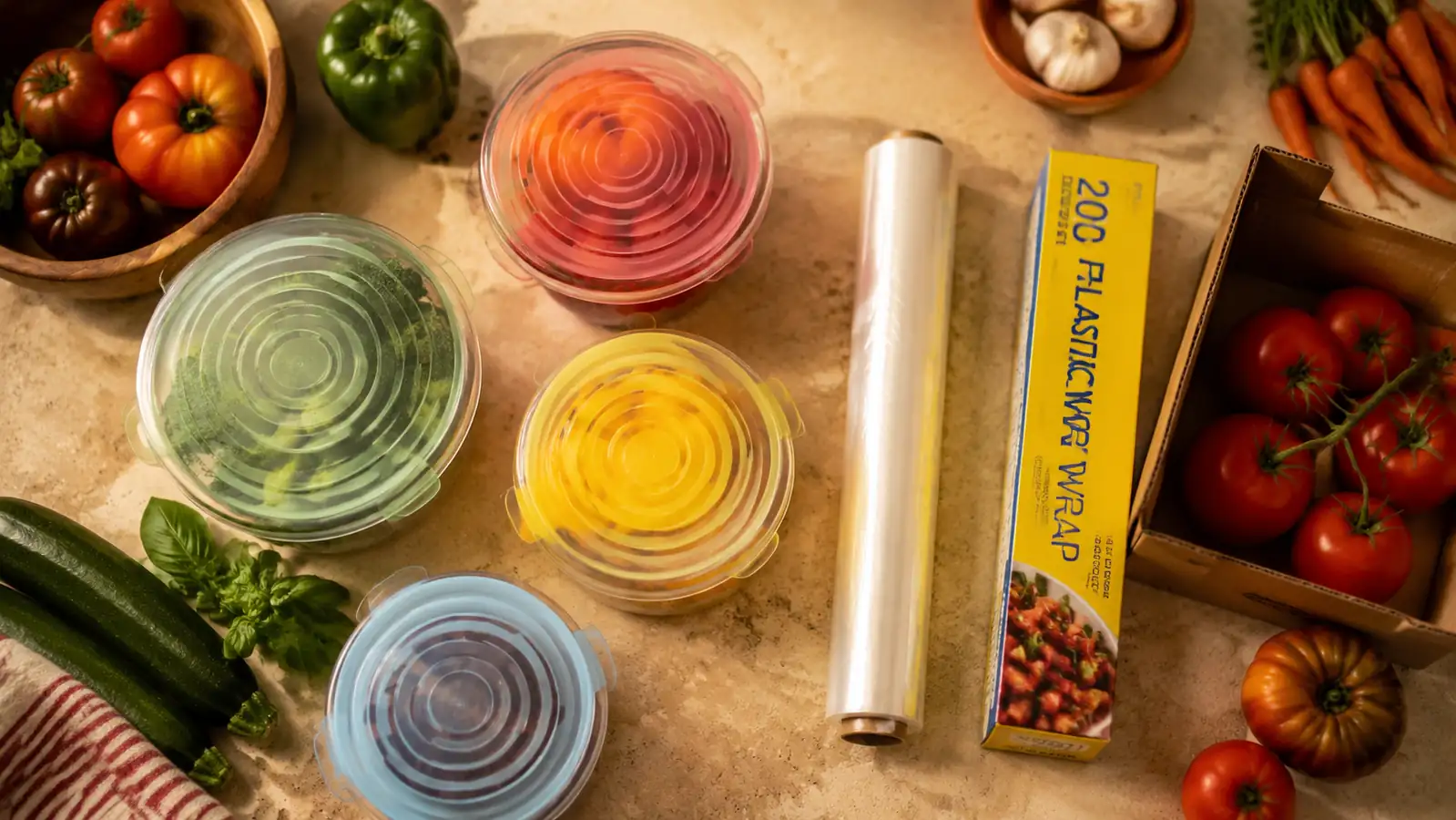
Short answer: if you cook with real produce more than a few nights a week, the Longzon silicone stretch lids save you money and cut down on trash within the first month, and they keep winning after that. I switched over two months ago, still keep a roll of plastic wrap in the drawer for a couple of specific jobs, and I'll tell you exactly which jobs those are below.
I'm Josie. I'm a nurse who works twelve-hour shifts and grows tomatoes, cucumbers, and herbs behind my house. Between garden harvests and hospital leftovers I bring home, I cover something in my kitchen almost every single day. That's a lot of chances for plastic wrap to tear, bunch up, or just not stick to the bowl right, so I decided to actually track both options side by side instead of guessing, using an actual notebook taped inside my pantry door for two months straight.
How I Tracked Both Over Two Months
I kept it simple. For the first month I covered everything the old way, plastic wrap on bowls, jars, and cut produce, and I logged every roll I opened. For the second month I switched entirely to the Longzon 14-pack and logged how many lids I used on a given day, whether any of them slipped or lost their seal, and how long cleanup took. I also ran a handful of direct side-by-side tests within that second month, same produce, same fridge shelf, one bowl with a lid and one with wrap, to see which one actually kept food fresher rather than just guessing from memory.
Nothing about this was scientific in a lab sense. It was one busy household, real dinners, real garden harvests coming in faster than I could always use them, and real trash bags going out to the curb. But that's the actual test that matters to me, not a sealed-lab humidity chamber. If a food cover can't survive my kitchen on a Tuesday after a double shift, I don't care what the packaging claims.
| Longzon Stretch Lids | Plastic Wrap | |
|---|---|---|
| Price (typical) | $15.99 for 14 lids, one-time purchase | $3.50 to $5 per roll, repeat purchase |
| Material | Food-grade silicone, stretches over rim and grips | Thin PVC or polyethylene film |
| Reusability | Reusable hundreds of times, wash and reuse | Single use, discarded after one cover |
| Seal Quality on Round Bowls | Tight, stays put through fridge and microwave | Sticks well fresh off the box, loosens over hours |
| Seal Quality on Odd Shapes | Struggles on cut avocado halves and narrow jar mouths | Wraps around any shape, including produce halves |
| Waste Generated Per Month | Zero, same 14 lids in rotation | One to two rolls depending on household size |
| Microwave and Freezer Safe | Yes, both, without removing the lid | Freezer safe, not recommended in microwave |
| Cleanup | Dishwasher safe, rinse and reuse same day | Balled up and thrown away, no cleanup |
| Overall Rating | 4.0 out of 5 (19,943 Amazon reviews) | Varies by brand, no single product to rate |
Where the Longzon Lids Win
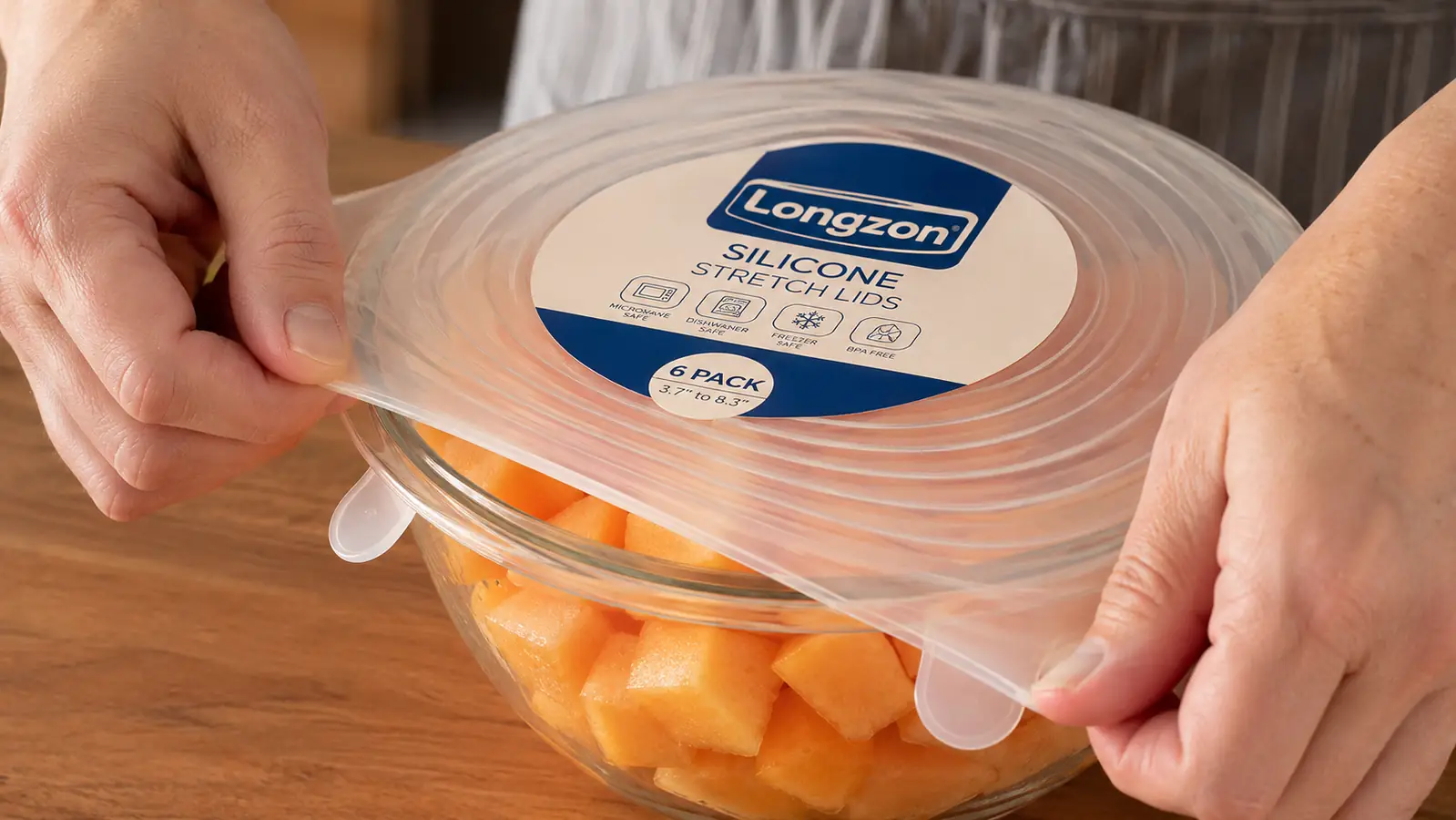
The first thing I noticed switching over was how much less time I spent fighting with the covering itself. Plastic wrap clings to itself before it clings to the bowl, and on a rushed weeknight that means a wadded-up ball of wrap in the trash before I even get the bowl sealed. The Longzon lids just stretch over the rim, grip with that silicone edge, and stay there. On a stack of six bowls of leftover rice and beans from a Sunday meal prep, that saved me real minutes, not just a feeling of ease.
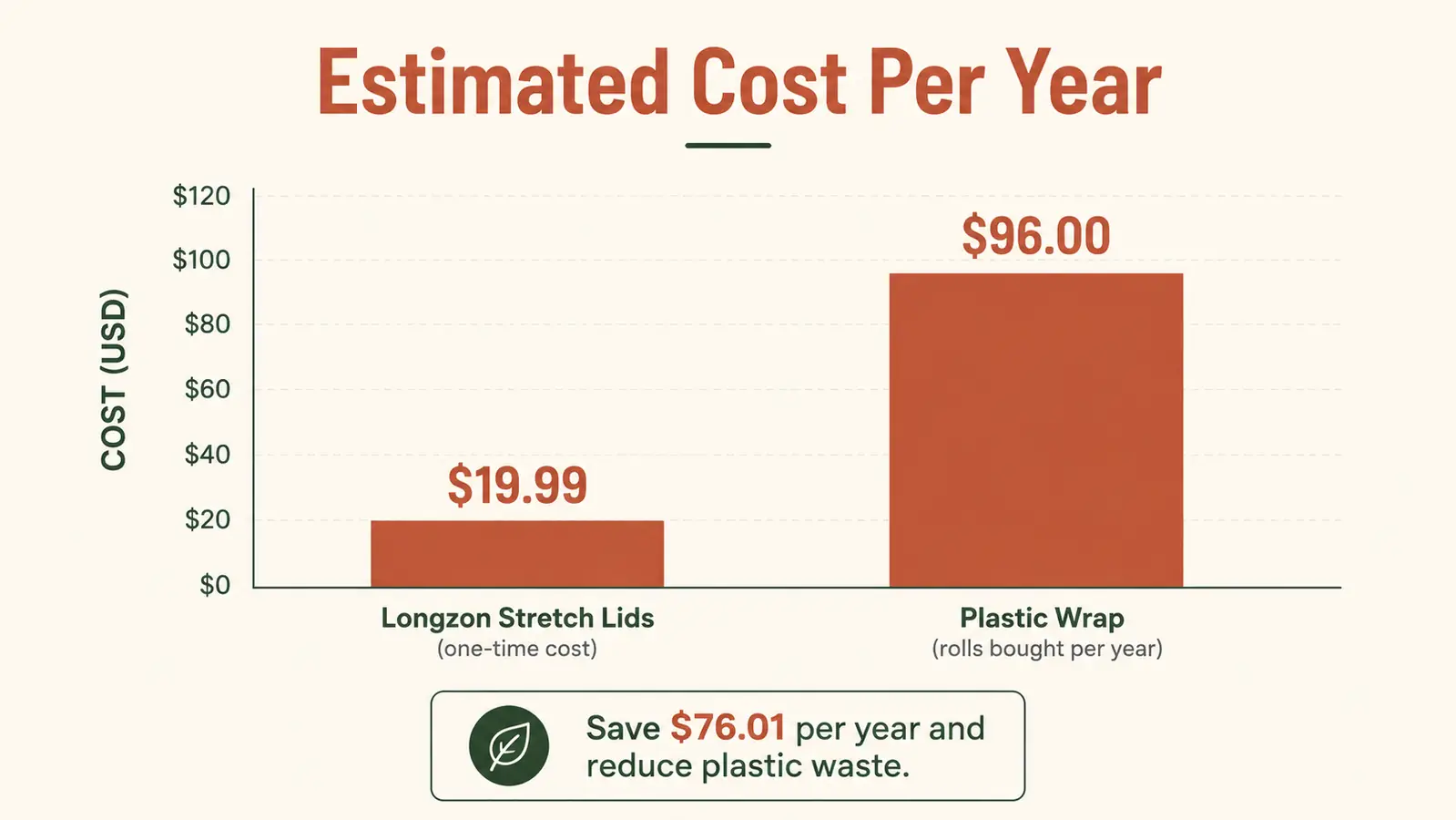
The bigger win shows up over a full month. I used to go through a roll and a half of plastic wrap covering garden tomatoes, cut cucumbers, and dinner leftovers. At around four dollars a roll, that's six dollars a month, seventy-two dollars a year, forever, with a bag of plastic scraps going into the trash every single time. The 14-pack of Longzon lids cost me $15.99 once. I'm eight months in and every lid is still in rotation. The math stopped being close somewhere around month three.
Freshness held up better too. I ran a direct test with two identical containers of cut watermelon from the same melon, one covered with a Longzon lid and one with plastic wrap, both in the same fridge shelf. After four days, the wrap-covered watermelon had started to dry out slightly at the exposed edges where the wrap had loosened. The lid-covered side stayed just as juicy as day one, because the silicone doesn't lose its grip the way plastic wrap does after the fridge door opens and closes a dozen times a day.
There's also a noise and mess difference that nobody talks about in the reviews. Pulling plastic wrap off the roll means tearing it against a metal edge that doesn't always cut clean, so you end up with a stretched, crooked piece half the time. The lids come off a hook by my stove already sized, so I just grab the one that fits the bowl in front of me. Small thing, but after a twelve-hour shift, small things are what actually get done or don't.
Cost Over a Full Year
I sat down and actually did the math after the two-month test ended, because gut feeling isn't the same as a number on paper. My household went through a roll of plastic wrap roughly every three weeks before the switch, sometimes faster during tomato season when I'm covering four or five bowls of chopped produce a week on top of regular leftovers. At four dollars a roll, that's about seventeen rolls a year, close to seventy dollars, and that number climbs if you're feeding more people or cooking more from scratch than I do.
The Longzon 14-pack cost $15.99 once. Even if I'm generous and assume a couple of the smaller lids wear out after a few years of daily stretching and dishwasher cycles, replacing the whole set again in year three or four still keeps me well under half of what I was spending on wrap every single year. By year two, the lids have already paid for themselves twice over, and every bowl I cover after that is essentially free. That's the number that actually convinced me to stop buying wrap in bulk at the store.
There's a trash-bag side to this math too, not just a dollar side. Seventeen rolls of plastic wrap a year works out to a lot of torn-off scraps going straight into the garbage, week after week, with nothing to show for it once the bowl is uncovered. The lids don't add a single piece of trash to that pile in a normal week, they just come off, get rinsed, and go back on the hook. For a household that's already hauling out compost from the garden beds, cutting one more stream of weekly waste out of the kitchen mattered more to me than I expected it would.
Does One Set of Lids Cover Everything in Your Kitchen?
The 14-pack comes in a mix of sizes, including two of the larger lids that stretch up to 9.8 inches across, which matters more than it sounds like it should. My biggest mixing bowl and my go-to casserole dish both fall right at that upper size range, and a smaller stretch lid just won't reach far enough to grip the rim without popping loose the first time the fridge shelf gets bumped. Plastic wrap never has this problem since you just tear off more of it, but it also means you're using more wrap on a bigger dish, which eats into the cost savings a little on those specific days.
Where the lids fall short on size is the small end. A single leftover deviled egg or a shot glass of salad dressing doesn't have a lid small enough in this particular set to feel snug, and I still reach for a scrap of wrap or a twist of foil for those odd little containers. It's a minor gap in an otherwise complete range, and it's the main reason I still keep both options in the kitchen rather than clearing the wrap out entirely.
Where Plastic Wrap Wins
I'm not going to pretend plastic wrap has no place in my kitchen anymore, because it still does. Odd shapes are its real strength. A cut avocado half with the pit still in, a wedge of cheese with an uneven edge, a casserole dish going into the oven, plastic wrap molds around all of those in a way a stretched silicone lid can't. I tried covering a half avocado with the smallest Longzon lid I had, and the pit kept the lid from sitting flush, so air got in around the dip anyway.
Plastic wrap also wins on narrow jar mouths and anything going straight into a hot oven. The Longzon lids are rated for the microwave, but I wouldn't put one anywhere near an open flame or a 350-degree oven, and the packaging doesn't suggest it either. For those specific jobs, the roll in my drawer still earns its spot, and I'd tell anyone switching over that keeping one roll on hand for oven dishes and odd produce shapes is the honest move, not an all-or-nothing swap.
There's one more spot where wrap still beats the lids for me, and that's travel. If I'm packing a dish to bring to a coworker's potluck and I want it sealed tight enough to survive a car ride sideways in a grocery bag, I still reach for wrap over a bowl, then a lid on top of that as a backup. It's the one time I use both at once instead of picking a winner.
Stop rebuying the same roll of plastic wrap every month.
The Longzon 14-pack silicone stretch lids cover everything from garden produce to leftover soup without tearing, bunching, or ending up in the trash. One purchase, hundreds of uses. Check today's price on Amazon before your next grocery haul.
Amazon Check Today's Price on Amazon →Who Should Buy Which
If you're covering round bowls, jars, cut melons, or leftovers most nights of the week, the Longzon lids pay for themselves fast and cut down on the kitchen trash you're hauling out every few days. That's most home cooks, and it's definitely me on a garden harvest week when I've got four or five bowls going into the fridge at once. If your kitchen leans heavier on oven dishes, odd-shaped produce, or narrow jar mouths, keep a roll of plastic wrap around for those specific jobs and let the lids handle everything else.
For my own kitchen, the lids do about ninety percent of the covering now, and the roll of wrap in the drawer has lasted me since spring instead of running out every three weeks like it used to. If you're on the fence, buy the 14-pack once and just see how many times you reach past the wrap for it in the first month. That's really the only test that matters, and it's the same one I ran on myself before I wrote any of this down.
One set of lids, almost no more plastic wrap runs to the store.
If you're tired of buying another roll every few weeks just to watch it tear or bunch up, the Longzon silicone stretch lids are the one-time swap that actually sticks around.
Amazon Check Today's Price on Amazon →